
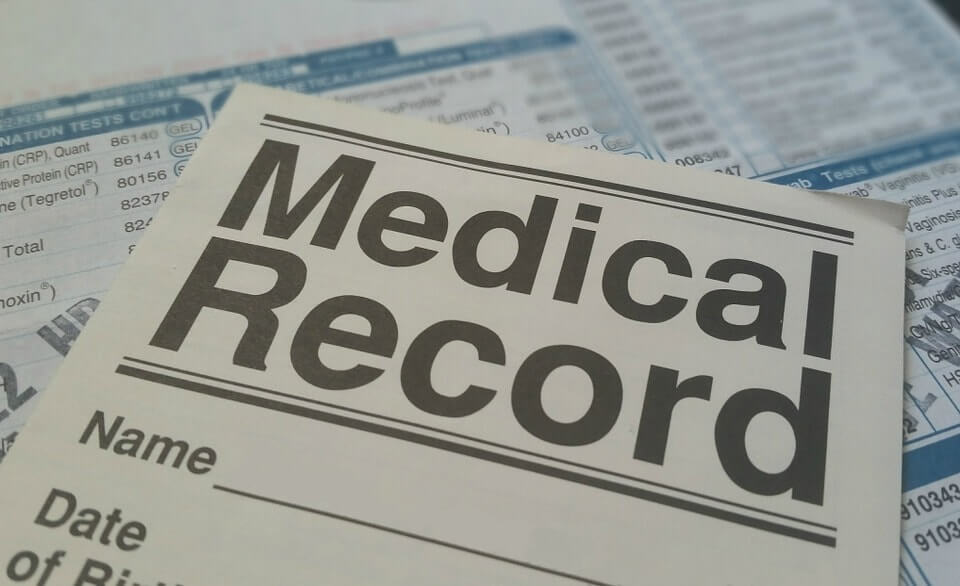
When making a personal injury claim—whether arising out of a motor vehicle collision, slip/trip and fall, dog/animal bite, etc.—thorough medical records is one of the most important requirements to support the claim. The medical evidence established between an injured victim and their physician lays the foundation to support (and strengthen) the case. Medical evidence may demonstrate how severe the injuries were, how long the symptoms lasted, as well as document the pain and other hardships an injured person endured while treating and recovering from the injuries.
Why are Medical Records Important?
The medical documentation produced from your care and treatment provides an insurance adjuster much of the information needed regarding diagnoses, treatments and procedures, and how the injuries affected your life and may continue to do so in the years ahead.
Failing to seek medical attention after an injury may suggest the injuries were not so bad, or as bad as one might later claim. Insurance companies are notorious for denying (or minimizing) an injured victim’s claim, arguing that the claimant really was not injured because they did not see a doctor. The insurance companies’ logic that if you are hurt, then you treat. Therefore, rather than pay for injuries, an insurance adjuster might offer to pay for the inconvenience an accident injury might have caused. That’s just unacceptable.
What’s more, visiting a medical facility, but not following the advice or attending follow-up appointments sends a similar message. To the insurance adjuster evaluating the claim, lack of follow-up treatment and/or failure to comply with a doctor’s recommendations may signal that the claimant was not hurt, or that any injuries sustained were minor. Your medical records help paint the full picture. With appropriate medical documentation, we can better prove injuries sustained (or caused) by the accident, the nature and extent of the injuries, treatment for the injuries, pain complaints, permanent health issues, how the injuries and treatment affected you, your job, your family, etc. and how the injuries and treatment may continue to affect you in the long term.
Addressing Gaps in Care
If there are gaps in your treatment, you can pretty much guarantee the insurance company will pounce on the opportunity to deny (or minimize) your claim, again arguing that you really were not hurt or that any injuries sustained were minor. While gaps in care are bad, do not be discouraged. Lebovitz Law Group may have strategies and counterarguments to explain or fix the gaps in care in your specific case.
When we have the necessary evidence to prove your case, the insurance company’s options are limited, and we are more likely to arrive at a favorable settlement outside of court. Furthermore, we find these settlements far more reasonable, fair and just than as compared with the injured claimant that received little to no treatment and with minimal to no medical evidence to support their injury claim.
If you are involved in a motor vehicle collision, slip/trip and fall, suffer a dog/animal bite, or any other personal injury, please seek medical attention right away. At LLG, priority number one is always your health, wellbeing and recovery. Second to that, as you now know, medical documentation is key to get you the compensation you deserve for your injuries. Whether you’ve followed the strict instructions of the doctors or have gaps in care, we urge you to contact us today.
Sort by Category
Related Posts

How Long Do You Have to File a Personal Injury Claim?
If you've been hurt in an accident, you've probably wondered how long you have to file a personal injury claim. The truth is, this deadline matters more than most people realize, and missing it can cost you your entire case. In this guide, we'll explain how these...

Car Accident Compensation: Common Mistakes That Can Reduce Your Claim
Car accident compensation can help cover losses after a crash. However, many people make simple mistakes after an accident. These mistakes may make an accident claim harder to prove. They may also affect the value of an insurance settlement. After a crash, it is easy...

Should You Accept the Insurance Company’s First Settlement Offer?
If you have been injured in an accident, receiving an insurance settlement offer may feel like a relief. After medical bills, lost income, and stress, you may want to accept the money and move forward. However, the first offer from an insurance company is not always...

Arizona Dog Bite Laws Phoenix: What Victims Need To Know About Liability, Deadlines, And Settlements
Arizona dog bite laws phoenix can make or break your claim, especially in the first days after an attack. Arizona offers strong protections for bite victims, but you still must follow the rules, preserve evidence, and meet strict deadlines. If you were bitten in...

Motorcycle Accident Attorney Phoenix: Why Claims Are More Complicated In Phoenix
If you were hurt in a crash, a motorcycle accident attorney in phoenix can help you avoid costly mistakes from day one. Motorcycle claims are not handled like car wreck claims. In Phoenix, insurers often fight harder, question injuries more, and push blame...

Car Accident Steps Phoenix: What To Do Immediately After A Crash (Step-By-Step)
The steps to take after a Car accident phoenix can feel overwhelming in the moment. However, what you do in the first minutes and the first few days can protect your health and your claim. This guide explains the exact steps to take after a crash in Phoenix, AZ,...